Busy dining rooms and crowded stores look risk-free externally, yet the risks know to anyone that has hung out on a solution flooring. A restaurant chokes on an item of steak. A barista faints from heat tension on a dual change. A storeroom employee cuts a thumb while opening cartons. Plenty of occurrences never make a report, however they slow down groups down, rattle self-confidence, and, in the worst cases, turn important. The difference between a close call and a misfortune typically boils down to the initial 2 minutes and whether a person nearby knows what to do.
That is where properly designed first aid and CPR training proves its worth. For hospitality and retail managers, buying a first aid course is not simply a conformity checkbox. It is a functional choice that protects customers, supports staff, and helps business run smoothly when the unanticipated hits.
Why friendliness and retail face distinct risks
Service services run in public rooms with high foot traffic, long running hours, and a variety old and health accounts amongst patrons and team. Threats alter throughout the day. Early morning bread job brings hot ovens and knives. Lunch rush enhances slip risks with splashed beverages. Evenings in certified venues bring alcohol, crowding, and sometimes torn tempers. On the retail side, weekends see prams, young children, and older customers with flexibility issues. Add seasonal spikes-- holiday queues, gift covering stations, short-term laid-back staff-- and the threat image grows more complex.
Several patterns repeat across venues:
- Choking and respiratory tract emergency situations during meal solution or in food courts. Fainting, warmth tension, and diabetic episodes in lengthy lines or warm kitchens. Lacerations from knives, box cutters, and broken glass. Burns from warmers, fryers, coffee heavy steam wands, and cleaning chemicals. Slips, trips, and sprains on damp floorings, chaotic backrooms, or unpredictable ladders.
In each scenario, time issues. Staff who can acknowledge warnings, give calm, clear directions, and supply preliminary treatment get precious minutes for expert responders. That ability starts with a high quality first aid and CPR course tailored to the truths of front-of-house, cooking area, back-of-house, and retail floor work.
What effective training appears like on the service floor
The toughest programs do three things well: instruct acknowledgment, construct muscle mass memory, and support decisions in a basic activity strategy. Acknowledgment implies noticing the difference between a coughing visitor who can still take a breath and a choking victim who can not talk. Muscular tissue memory comes from practice, not slides, which is why cpr training have to consist of hands-on compressions at right deepness and price. A basic activity strategy transforms panic into a series: call for aid, clear the area, start treatment, revolve roles.
When examining first aid courses for hospitality and retail, search for the list below aspects woven into circumstances you will really encounter:
- Primary survey skills that operate in limited, noisy rooms: examining responsiveness, air passage, breathing, and flow without overcomplicating the assessment. CPR course elements that pierce compressions on grown-up mannequins, with optional modules for child and baby CPR if your location offers families or hosts kids' events. Use of an AED, consisting of where to position pads on different body types and exactly how to continue compressions in between shocks. Management of choking, consisting of back strikes and stomach drives for adults, with support on when to change strategies or call for innovative help. Bleeding control and wound care with the products you actually bring front-of-house, like bandages, gauze, and tidy fabrics, not simply suitable kits. Burn first aid that fits food service facts, from scalds to oil sprinkles, focusing on air conditioning, covering, and when to escalate. Recognition of fainting, seizures, asthma, anaphylaxis, and diabetic person hypoglycemia, with clear limits for calling a rescue versus monitoring. Communication and crowd management, because the first aider will typically need to designate jobs, clear a space, and tranquil observers while proceeding care.
Providers such as First Aid Pro and comparable companies in your area commonly supply first aid and cpr courses that match these requirements, from entry-level to advanced. The framework of the day issues: much shorter, focused sessions for high-turnover teams, or mixed learning where theory is finished online and functional assessment is done on-site prior to opening hours. Many hospitality and retail procedures favor on-premise distribution, which allows instructors adapt drills to the real kitchen area line or shop layout.
CPR: what team really need to know
Cardiac apprehension does not respect settings. It happens in great dining-room and price cut electrical outlets, occasionally in full sight. The technicalities of cpr can frighten first-timers, yet the core is uncomplicated: solid, undisturbed breast compressions at a rate of concerning 100 to 120 per minute and a deepness of roughly 5 to 6 centimeters in adults, with full recoil between compressions. Stopping briefly just for defibrillator triggers and minimal breaths is far better than attempting perfect book ventilations and shedding momentum.
AEDs have ended up being usual in shopping mall, resorts, online casinos, and huge dining establishments. Familiarity removes hesitation. Personnel must exercise:
- Grabbing the closest AED with confidence and powering it on. Placing pads correctly, cutting or drying the upper body if needed, and adhering to voice cues. Clearing the client before shock, while one team member maintains count for compressions.
Shops without an on-site AED ought to know where the local unit is located in the facility and who has access. Place that detail right into your emergency strategy and rehearse it. If a structure AED lags a safety and security desk, a staff runner ought to understand the fastest route and have a way to determine themselves.
CPR skills decay quickly without usage. A cpr refresher course every one year is a practical cadence, with brief in-shift drills in between. Five minutes of compressions on a training manikin at a pre-shift conference each quarter keeps method sharp. Managers usually fret that short drills will certainly agitate consumers. In technique, pre-opening sessions or backroom refreshers are inconspicuous and develop spirits, transforming stress and anxiety right into Learn here silent confidence.
First help beyond CPR: the occasions you will see most
The emergency situations most groups deal with are not heart attack but the constant, day-to-day incidents that transform immediate if mishandled. New managers in some cases undervalue just how promptly a small cut bleeds, just how quickly a hot oil sprinkle sores, or exactly how an easy faint can create a secondary head injury. A strong first aid course covers the nuances.
Bleeding and lacerations are routine in cooking areas and stockrooms. The immediate top priority is strong, straight pressure with clean gauze or cloth, elevating the limb if practical. Personnel should learn when to apply a stress plaster, when to make use of hemostatic gauze if offered, and when to leave ingrained items in place while maintaining around them. A guest with a glass cut near the wrist or a colleague with a deep box-cutter slice can weaken promptly if bleeding is not regulated within the first minute.
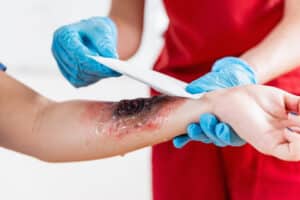
Burns should have regard. The response to use ice or butter persists regardless of years of advice to the contrary. Training stresses trendy running water for 20 minutes, getting rid of rings and tight clothing early prior to swelling, First Aid Training Port Adelaide and preventing creams on fresh burns. Lots of food solution burns look minor initially then get worse over the next hour. A conservative policy aids: if a melt blisters, extends a joint, or is larger than the palm of the individual's hand, seek medical assessment.
Choking is much less typical than feared however demands crisp activity. The distinctions issue: an individual who can speak, cough, or breathe demands inspiration to cough, not back blows. A failure to breathe, talk, or a quiet, stressed expression asks for prompt back impacts adhered to by abdominal thrusts. Personnel must rehearse these steps on training aids, not simply enjoy a video clip. In actual incidents, the initial aider needs to additionally route bystanders to call emergency services and bring the AED, since heart attack can adhere to unsettled choking.
Medical episodes such as fainting, asthma, allergies, seizures, or reduced blood glucose surface on a regular basis in public venues. A great first aid and cpr course builds pattern recognition. Warm, dehydration, and prolonged standing predict easy fainting episodes, which typically fix with supine positioning and leg elevation. Bronchial asthma strikes respond to inhaler spacers when made use of very early and properly. Anaphylaxis requires prompt use of an epinephrine autoinjector, which some venues maintain in their packages or which visitors might bring. Diabetic hypoglycemia can resemble drunkenness. Providing fast-acting sugar and reconsidering responsiveness in mins stops hostile safety responses that miss the clinical reality. Seizures require defense of the head, clearing the area, timing the occasion, and perseverance, not restriction or things put in the mouth.
Turning training right into everyday readiness
Even the very best one-day class fades if it remains abstract. The method is to bake first aid right into exactly how the group establishes a shift. Many locations do pre-service instructions for food selection modifications and bookings. Include one minute for safety:
- Who is initial aider working and that is backup if they are tied up? Where is the first aid kit today and has it been checked for stock? Where is the local AED and that is the runner appointed to bring it if needed? Who calls emergency situation solutions and that meets responders at the entrance?
Those fast checks turn concept right into muscle mass memory. Dining establishments that do this constantly take care of cases with much less dramatization. In one bistro I worked with, a guest began choking 2 minutes after meal service. The floor supervisor listened to the phone call, nodded to the formerly assigned AED runner, and relocated to the table while the host dialed emergency situation services. The guest got rid of the blockage after collaborated back strikes and drives, never ever passed out, and recouped with water and tranquil peace of mind. The entire event took less than 3 minutes and barely disrupted bordering tables. The distinction was not good luck, it was rehearsal.
Retail teams can mirror the same approach. Shopping mall shops rely on shared infrastructure. Recognizing the mall's AED areas, solution corridor accessibility points, and safety and security get in touch with numbers belongs to the opening list. New employs learn to point to the first aid set and AED map prior to they learn the returns policy.
Choosing the right first aid and cpr course
Not all programs are equal, and price alone is an inadequate guide. Utilize these filters when choosing a provider:

- Relevance to service atmospheres. Request study or modules certain to cooking areas, bar solution, and retail floors. General office situations do not cover oil burns or choking throughout table service. Accreditation and recognition. Ensure the first aid certificate satisfies governing requirements in your jurisdiction and is approved by your insurer or company safety and security policy. Hands-on ratio. Live method time on mannequins and with AED fitness instructors should dominate the cpr courses, not simply glide decks. A reasonable target is at least 30 to 40 mins of compressions per individual across scenarios. On-site shipment and scheduling versatility. Early morning, split sessions, or after-hours choices minimize interruption. Companies like First Aid Pro and comparable nationwide networks frequently travel to your venue and adapt to your layout. Refresher paths. A cpr refresher course need to be very easy to publication and readily available in compressed formats for returning students. Inquire about micro-drills or video clip prompts you can run internal between certifications.
Hospitality teams with several websites benefit from standardizing on one first aid training companion. The content remains constant, documents are less complicated to track, and negotiated pricing can make frequent refreshers budget-friendly. For single-site operators, look for local trainers with strong reviews from restaurants or stores in your area, not just generic testimonials.
Regulatory assumptions and insurance realities
Most territories anticipate a minimum of one qualified very first aider to be existing during operating hours, with additional coverage for higher-risk environments or bigger headcounts. Kitchen areas and accredited locations frequently fall into higher-risk categories. Stores in huge footprints, multi-level shops, or areas serving high volumes of susceptible customers may likewise need even more coverage.
Insurers focus. Claims data reveals that timely, proper first aid lowers difficulty rates and long-tail expenses. Some insurance companies use premium incentives when a collection percent of personnel hold a current first aid and cpr certificate and when AEDs are registered and kept. Also when discount rates are small, underwriters look even more positively on companies that can record training, devices checks, and event reaction strategies. If you report a major injury and can additionally reveal the first aider adhered to acknowledged procedures, the discussion is smoother and less adversarial.
Documentation issues. Maintain electronic copies of first aid certificates in a common folder, tag expiration dates, and established pointers 60 days before revival. Preserve a set log that notes restocks and a regular monthly AED readiness check if you hold a device. These habits take mins, and they settle throughout audits or after a significant event.
First help sets and AEDs that match your space
A first aid course usually finishes with a sales pitch for a kit. Prior to getting, look at your floor plan, headcount, and event background. A café with 10 staff and a solitary dining room requires a compact, clearly labeled kit placed near the pass, with burn modules near fryers and coffee terminals. A two-level retailer benefits from two kits, one upstairs, one down, to maintain reaction times under a minute. If your place hosts exterior seating or pop-up stands, consider a portable kit for strolling supervisors.
AED acquiring is a larger step, yet the mathematics favors hectic venues. Public cardiac arrest survival jumps considerably when an AED provides an early shock, typically increasing survival probabilities compared to CPR alone. If your building does not use dependable access to a common AED within three minutes round trip, having one is reasonable. Select a device with clear voice triggers, youngster mode if you hold family members, and pads with a long shelf life. Register it with regional emergency solutions when possible so dispatchers can direct callers to it.
Whatever you purchase, educate with it. If your AED version has a training double, ask your supplier to bring it to your cpr training so personnel obtain responsive knowledge with your specific tool. I have actually seen hold-ups of 45 seconds while a team screwed up with unfamiliar pad packaging. That is not an objection, it is an avoidable rubbing point.

Building a culture where people step forward
Policies and certificates are the scaffolding. Society is the engine. In high-functioning locations, team speak out early when something looks off. They tell a wobbly customer, kindly, to rest. They fetch water and look at the guest in the peaceful edge who has actually not touched their dish. They ask the line chef who appears pale to take 5, then loop in the manager. This is not policing, it is care.
Leaders set that tone by praising great catches and normalizing fast debriefs after cases. A five-minute huddle after shutting, asking what worked out and what to change, seals understanding. Possibly the first aid kit was more challenging to reach than expected during the lunch rush. Move it. Perhaps the appointed emergency situation customer can not hear over the bar sound. Choose a quieter message for that role. Small tweaks add up.
New team members often carry one of the most uncertainty. Couple them with mentors that go through the security essentials on day one: where the set lives, how to raise an alarm, when to call a rescue without requesting authorization. Self-confidence grows when staff recognize the limits: you can not harm a person by starting CPR on an individual in cardiac arrest, but you can cause harm by delaying. You should not offer drug other than what a person already brings and granted use, except for epinephrine in some territories under first aid guidelines. That clarity gets rid of the anxiety of getting in problem for helping.
Cost, time, and organizing without shedding momentum
Managers manage lineups, spending plans, and seasonal swings. The idea of drawing First Aid Training Oxley 5 personnel for a half-day first aid and cpr course can feel difficult throughout profession heights. There are convenient patterns that maintain solution humming:
- Blended knowing, where concept is done on-line midweek during quieter hours, and sensible assessment is arranged morning before service or after close. Rotating presence, 2 or 3 personnel at a time, throughout 2 weeks, so coverage remains stable. Cross-venue mates for groups with sister places, filling a session effectively without stripping one website bare.
Pricing differs by area and supplier. As a harsh overview, a typical first aid and CPR course usually sits in the low hundreds per person, with cpr refresher course choices priced reduced. On-site group prices bring per-head down meaningfully. When you spread the price over the certification duration, and contrast it to one preventable employees' compensation case or a lost shift because of a mishandled injury, the investment is very easy to justify.
What success resembles after six months
When training sticks, you observe little signals. The kit is clean and replenished without chasing. The team calls problems early instead of hiding them. A visiting family members's allergic reaction is taken care of calmly, with the autoinjector used without delay and paramedics satisfied at the door. A cooking area shed is cooled down properly, documented, and followed up so the cook returns safely. A Saturday group sees a guest collapse; compressions start within 30 seconds, the mall AED gets here before the ambulance, and by the time paramedics take over, a shock has actually been supplied and a pulse is back. These are not hypotheticals. I have enjoyed each situation play out in places that took training seriously.
The reward is not just emergency situation performance. It is the decrease in churn because team really feel taken care of. It is the customer who composes that your web server's calm action in a scary minute turned them into a faithful customer. It is the insurance provider who processes an insurance claim efficiently due to the fact that your paperwork reads like it was created by experts. Civic count on expands when public areas are much safer, and services are part of that fabric.
Practical next steps for managers
If you are starting from scratch, maintain it basic. Select a credible company such as First Aid Pro or a reputable local equivalent. Schedule first aid and cpr courses for a core group of managers and elderly staff within the following month. Select your roster protection guideline, for instance, at the very least two existing first aid certificate owners at work in any way times, extra on weekend breaks. Order or investigate your first aid packages to match your format, and map the nearest AED. Create a one-page emergency situation strategy, print it at the host stand and in the back office, and walk the group via it at the next pre-shift. Arrange a cpr correspondence course for the core group at the 12-month mark and add quarterly five-minute drills to your calendar.
Even if you do just that, your danger profile modifications for the better virtually instantly. With time, you can add layers: innovative modules for supervisors, youngster and infant CPR if you hold families, mental wellness first aid for late-night groups, and train-the-trainer courses so elderly personnel can lead micro-drills. None of this needs heroics, just consistent focus and the humility to maintain learning.
A restaurant or a shop will certainly always be a place where surprises happen. The goal is not to get rid of threat but to be prepared for it. First aid training is an artisan's device in that initiative, useful and trustworthy. Put it in your team's hands and utilize it often.